Copper vs Aluminium Transformer Windings: Which Is Right for Your Project?
Every distribution transformer has to push current through a conductor, and the choice of that conductor, copper or aluminium, shapes the price, the losses, the weight and the service life of the unit you buy. It is one of the first decisions a specifier makes, and one of the easiest to get wrong, because the cheapest quotation is rarely the cheapest transformer.
Both metals are used in units built to IEC 60076 and ANSI/IEEE C57.12.00, and both are reliable when the design is right. The real question is not which metal is “better” in the abstract, but which one fits your load profile, budget, installation and lifetime expectations. This guide walks through the trade-offs so you can specify with confidence.
Why the winding material matters
The winding is the part of the transformer that carries current. Its conductivity sets how much energy is lost as heat (the I²R or “copper loss”), and therefore how efficient the transformer is, how hot it runs, and how much of your electricity bill disappears inside the unit every year.
Copper and aluminium are not interchangeable at the same dimensions. Aluminium has roughly 61% of the electrical conductivity of copper, so an aluminium winding needs a conductor cross-section about 1.6 times larger to carry the same current with the same resistance. That single fact drives almost every other difference, size, weight, cost and mechanical behaviour.
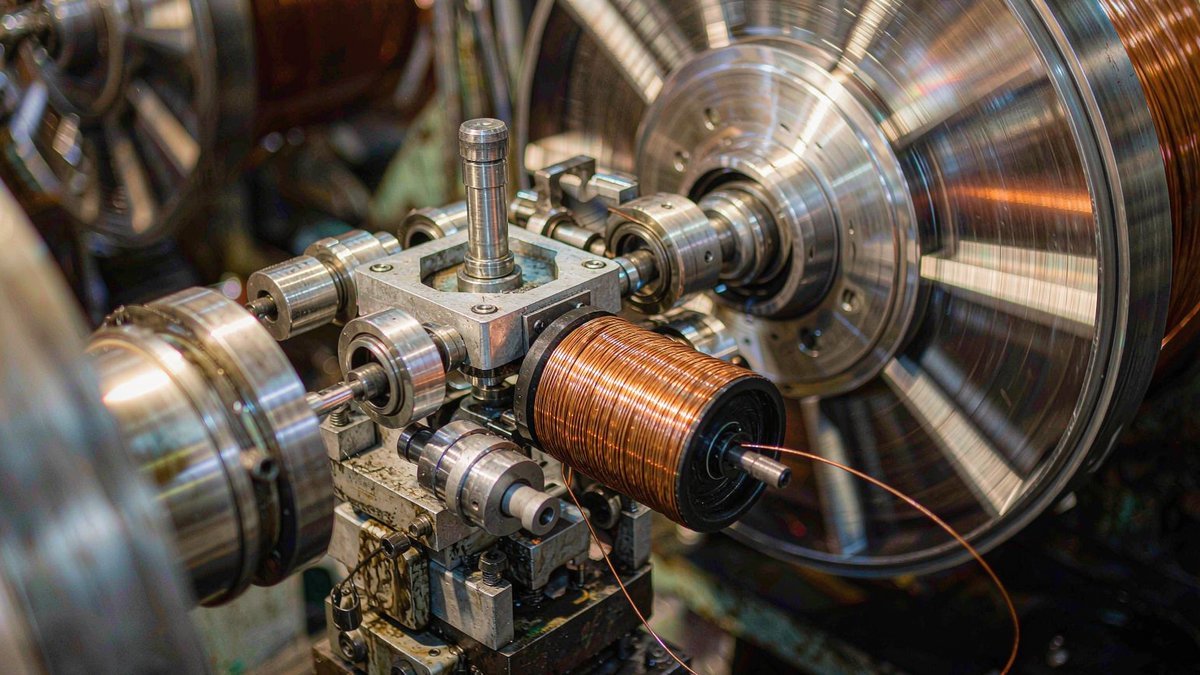
Copper windings: strengths and trade-offs
- Lower losses. Higher conductivity means lower I²R losses for a given design, which improves efficiency and reduces running cost over 20–25 years.
- More compact. A smaller conductor cross-section leaves more room in the core window, allowing a tighter, lighter core for the same rating.
- Stronger mechanically. Copper has higher tensile strength and better resistance to the mechanical forces produced during a short circuit.
- Proven and stable. Decades of service history and predictable behaviour under thermal cycling.
- Trade-off: cost. Copper is priced on metal exchanges and is significantly more expensive per kilogram, and more volatile, than aluminium.
- Trade-off: weight and theft risk. The finished unit is heavier, and copper has a high scrap value, which matters in some locations.
Aluminium windings: strengths and trade-offs
- Lower material cost. Aluminium is cheaper per kilogram and lighter, which lowers the initial price of the transformer.
- Much lighter. For the same conductor volume, aluminium weighs about one third as much as copper, a real advantage for large units, roof installations and long transport routes.
- Good for large ratings. Where copper cost becomes prohibitive at high kVA, a well-designed aluminium unit can be the only economical option.
- Trade-off: larger windings. The bigger cross-section needs more space, so the core and tank can grow unless the design is optimised.
- Trade-off: higher losses if not designed up. An under-designed aluminium winding will run hotter and less efficiently.
- Trade-off: mechanical and joint care. Lower short-circuit strength means better clamping is needed, and the oxide layer on aluminium demands proper bimetallic joints and terminations.
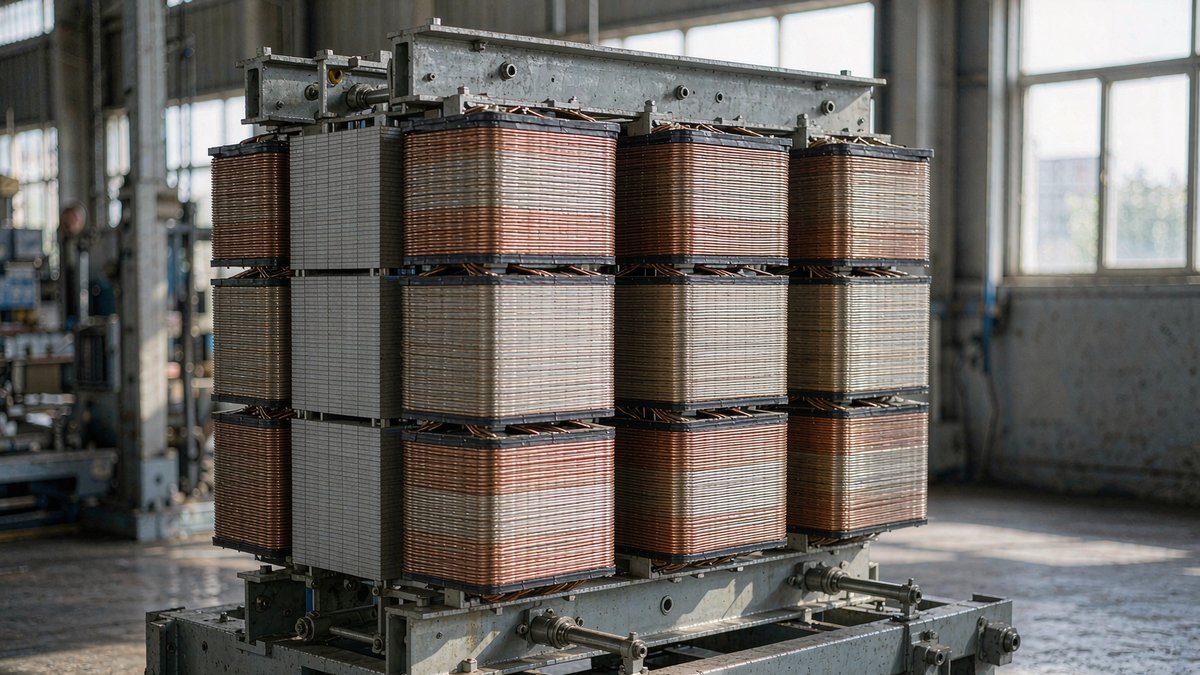
Side-by-side comparison
| Factor | Copper winding | Aluminium winding |
|---|---|---|
| Conductivity | Higher (reference) | ≈ 61% of copper |
| Conductor cross-section | Smaller | ≈ 1.6× larger for equal resistance |
| I²R (load) losses | Lower for a given design | Higher unless optimised |
| Weight | Heavier | About one third the weight |
| Initial cost | Higher, exchange-linked | Lower |
| Short-circuit strength | Higher | Lower, needs careful clamping |
| Typical use | Efficiency-critical, space-limited, high duty | Budget-led, weight-limited, large kVA |
Don’t compare purchase price alone
A transformer is bought once and paid for continuously. A lower-priced aluminium unit with higher losses can cost more over its life than a copper unit with a higher sticker price, because the extra losses are billed every year. The crossover point depends on your load factor and electricity tariff: the more hours you run near full load, and the higher your energy price, the more a lower-loss copper winding is worth.
This is the same logic that makes total cost of ownership a better comparison than price, and it is why no-load and load losses should always be specified in the enquiry.
Which should you specify?
Choose copper when
- Efficiency and low lifetime energy cost are the priority.
- The transformer runs at high load for many hours a day.
- Space or weight is not the limiting factor, or the unit sits indoors in a tight room.
- Short-circuit duty is severe, or the supply is weak and fault levels are high.
- The project is premium or long-life, where reliability outweighs first cost.
Choose aluminium when
- Budget is the dominant constraint and load factor is moderate.
- Weight and transport are the real problem, rooftop, remote site or large kVA.
- The transformer is lightly loaded or used as a standby unit.
- The design is properly optimised for aluminium, with adequate conductor area and robust clamping.
In practice, many large oil-immersed units use aluminium foil or strip windings, while dry-type cast-resin units and efficiency-critical projects lean toward copper. The right answer comes from your load profile, not from a rule of thumb.
Common mistakes
- Comparing quotations on purchase price only, ignoring losses and lifetime energy cost.
- Leaving the winding material unspecified in the RFQ, so suppliers quote different designs.
- Assuming every aluminium unit is low quality, a well-engineered one is not.
- Ignoring load factor, which is what actually decides whether copper pays back.
- Overlooking joint and termination quality, which is where aluminium problems usually start.
Frequently asked questions
Is an aluminium winding transformer worse than a copper one?
Not automatically. An aluminium unit that is properly designed, with adequate conductor area, good clamping and correct bimetallic joints, is reliable and efficient. The risk lies in under-designed units, not in the material itself.
Why do aluminium transformers sometimes cost less?
Mainly because aluminium costs less per kilogram and weighs about a third as much as copper for the same conductor volume. That reduces both material cost and freight cost, which matters on large units shipped overseas.
Should I specify the winding material in my enquiry?
Yes. If you leave it out, different suppliers will quote different designs and the prices will not be comparable. State the material, the losses and the load profile you expect, so every quotation is measured on the same basis.
Get the right winding for your project
Youge manufactures distribution transformers with both copper and aluminium windings, built to IEC 60076 and ANSI/IEEE C57.12.00, from 15 kVA pole-mounted units to 16,000 kVA oil-immersed transformers, including dry-type cast-resin and oil-filled distribution transformers.
Share your rated capacity, voltages, load profile and installation conditions, and our engineering team will recommend the winding material and design that gives you the best balance of first cost and lifetime cost, with a technical proposal and quotation within 24 hours. Request a quote or browse the full product range.